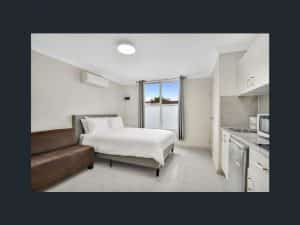


SIL, SDA, Medium Term Accommodation and short-term respite solve different problems. The names sound similar, but one may fund support workers, another may fund a specially designed home, and another may only provide a temporary place to stay.
The four options at a glance
Supported Independent Living (SIL)
Regular support from workers for people who need a significant amount of help at home throughout the week. Support can include personal care, preparing meals, routines, medication support, safety and skill development.
SIL does not pay for: the house, rent, groceries, utilities or other ordinary living costs.
Specialist Disability Accommodation (SDA)
A specially designed or modified home for eligible participants with very high support needs or extreme functional impairment. Features may include wider circulation spaces, accessible kitchens or automated doors.
SDA does not pay for: the support workers who assist the person inside the home.
Medium Term Accommodation (MTA)
A temporary place to live for up to three months in specific circumstances while a longer-term home is not yet ready. It is generally a one-off transition support.
MTA does not pay for: daily living support; that support must be funded separately where approved.
Short-term respite
A brief disability-related stay away from the usual home. It may support skill building, community participation or the sustainability of informal care arrangements.
It is not: a holiday, long-term housing or a general solution to homelessness.
Detailed comparison
| Option | Main purpose | What it generally covers | Useful next question |
|---|---|---|---|
| SIL | Ongoing daily support at home | Support-worker assistance and supervision | What support does the participant need across a typical week? |
| SDA | A specialist home | The eligible dwelling and its design features | What SDA design category and location meet the person’s needs? |
| MTA | A temporary bridge | Accommodation for an approved transition period | What is the confirmed long-term housing pathway and what is delaying the move? |
| Short-term respite | A brief disability-related stay | Agreed accommodation, care and activities within the approved support | What disability-related outcome should the stay achieve? |
Can a participant use more than one option?
Yes. These supports are not automatically interchangeable, but they can work together when each one is approved and meets a different need. A participant might live in an SDA home and receive SIL support. Another participant may use MTA while waiting for an SDA property or home modifications to be ready. A person receiving ongoing in-home support may also use short-term respite where it is funded and connected to their disability-related goals.
The NDIS considers each participant’s circumstances, evidence, goals and funding criteria. Approval for one support does not guarantee approval for another.
How to decide which pathway to explore
Start with the problem that needs to be solved
- Is the person’s current home physically unsuitable? Explore accessible mainstream housing, home modifications or SDA eligibility.
- Does the person need substantial support with daily life at home? Explore SIL or another home-and-living support model.
- Is a suitable long-term home confirmed but temporarily unavailable? MTA may be relevant.
- Is a short disability-related break needed for skill building, participation or to sustain informal supports? Explore short-term respite.
Separate housing from support
This is one of the most important planning steps. The home, tenancy and support service are different decisions. Ask who controls the tenancy, what the person pays privately, who delivers daily support, and whether the participant can change support providers without losing their home.
Use current evidence
Useful information may include a functional assessment, support needs across a typical week, communication and behaviour support information, risk and health plans, accessibility requirements, the participant’s own housing preferences and evidence about why other options are not suitable.
Questions participants and families often ask
Does SIL mean living in a group home?
Not necessarily. SIL is often delivered in a shared arrangement where participants share some supports, but it may also be delivered to a person who lives alone when that model is approved and appropriate.
Do I have to live in SDA to receive SIL?
No. SIL and SDA are separate. A participant can receive SIL in different types of housing, and an eligible participant can live in SDA while using a different approved support model.
Does MTA include 24/7 support?
MTA funds the temporary accommodation, not the support workers. Any personal care or daily support needs must be funded and organised separately.
Can short-term respite be used as emergency housing?
It is not general crisis accommodation. Where an urgent situation occurs, the participant, support coordinator or NDIS contact should identify the safest disability, health and mainstream housing response.
Who pays rent and groceries?
Participants are usually responsible for ordinary living costs such as rent, groceries, utilities, phone and internet. The exact arrangement should be clearly explained before a service agreement or tenancy agreement is signed.
A practical referral checklist
- Participant goals, preferences and consent to share information
- Current NDIS plan dates and relevant approved budgets
- Functional assessment and daily support requirements
- Mobility, accessibility and equipment requirements
- Communication profile, behaviour support plan and restrictive-practice information where relevant
- Medication, mealtime, health and emergency support plans
- Preferred location, household size, routines and compatibility considerations
- Proposed move date and confirmed longer-term pathway where MTA is being explored
Need help matching the pathway to the person?
Eden Ability can discuss accessible housing, Supported Independent Living, respite, Medium Term Accommodation and coordinated hospital-discharge support across Sydney.
Sources and currency: This guide was reviewed in August 2026 against the NDIS guide to home and living options, the NDIS short-term accommodation information and the NDIS Commission SIL Practice Standards. It is general information, not a guarantee of funding. Check current NDIS guidance for your circumstances.